Machined stainless · Patent pending

Mark it.
Aim it.
Walk away.

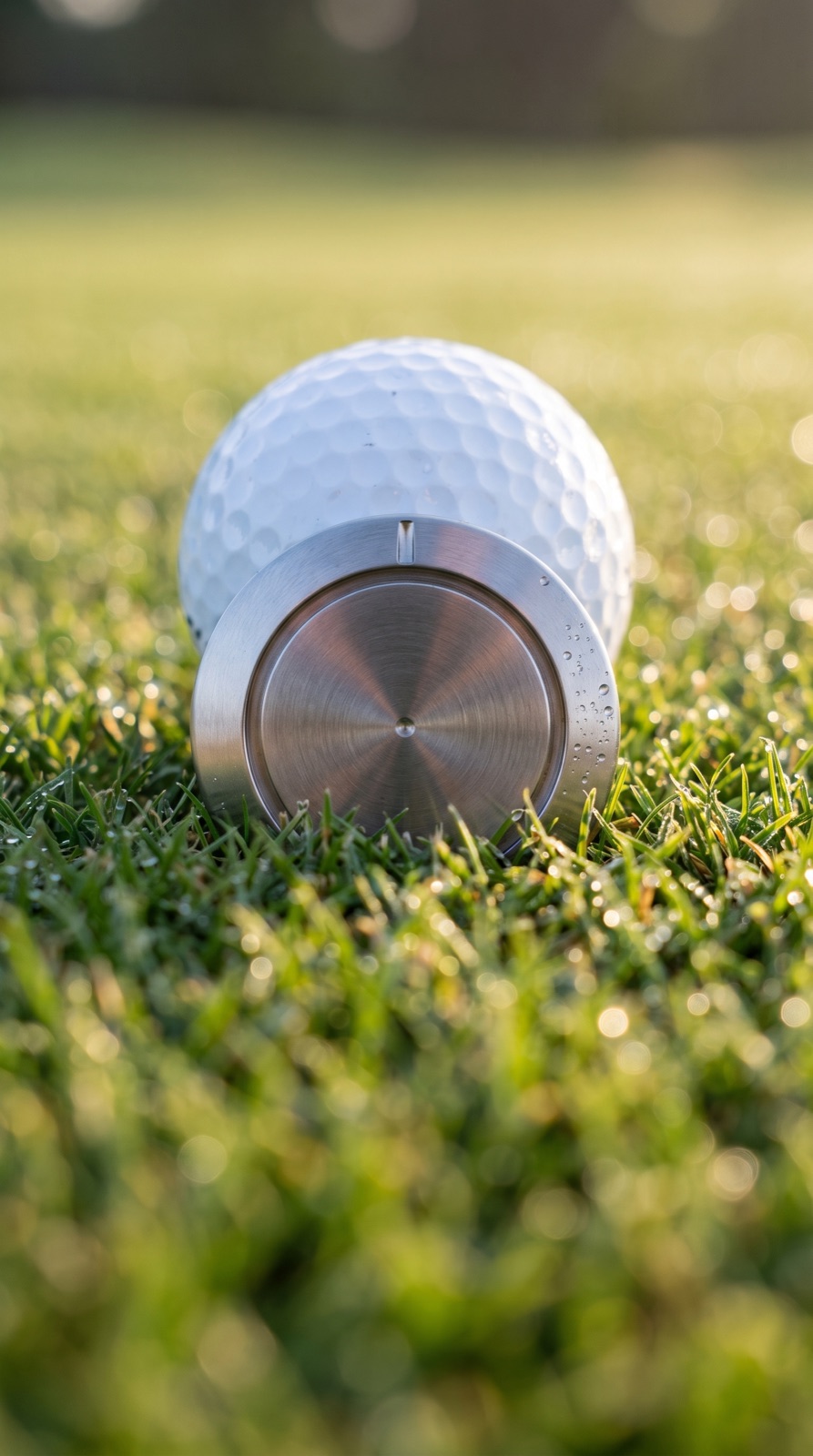
A low-profile stainless marker stays in the green. The alignment tool snaps onto it magnetically, swivels with a nudge of your putter, and lifts away — leaving nothing in anyone's line but a coin-sized disc.

Designed in East Williston, New York

Why we built it

The plastic ones snap.

Every alignment marker on the market is injection-moulded plastic. The spikes break in your pocket, the rotating tail snaps in the bag, and the whole thing is tall enough that playing partners ask you to move it.

So we started over in metal, and split the problem in two: a marker that holds your lie, and a tool that sets your line. They meet magnetically and come apart in a heartbeat.
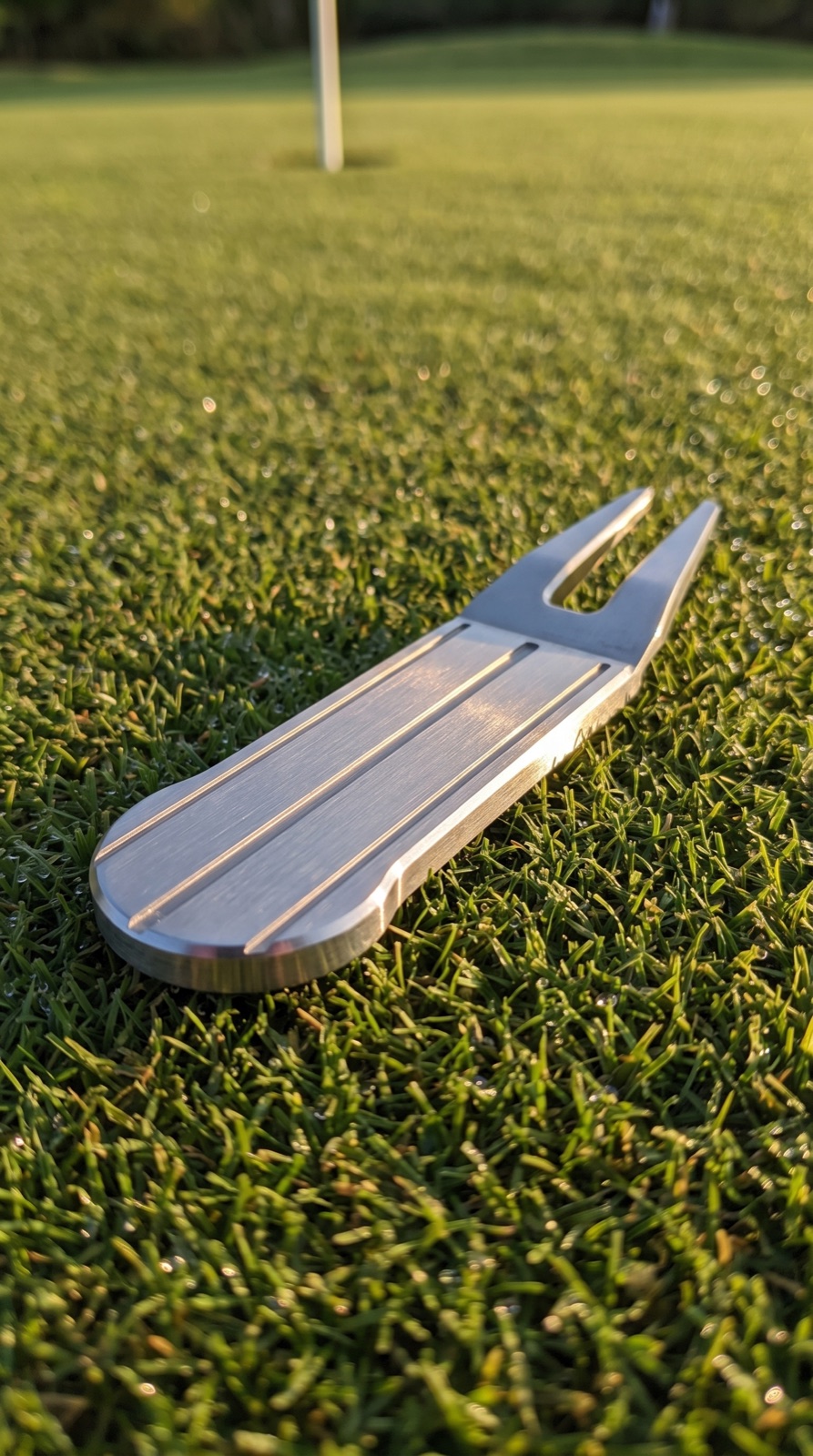
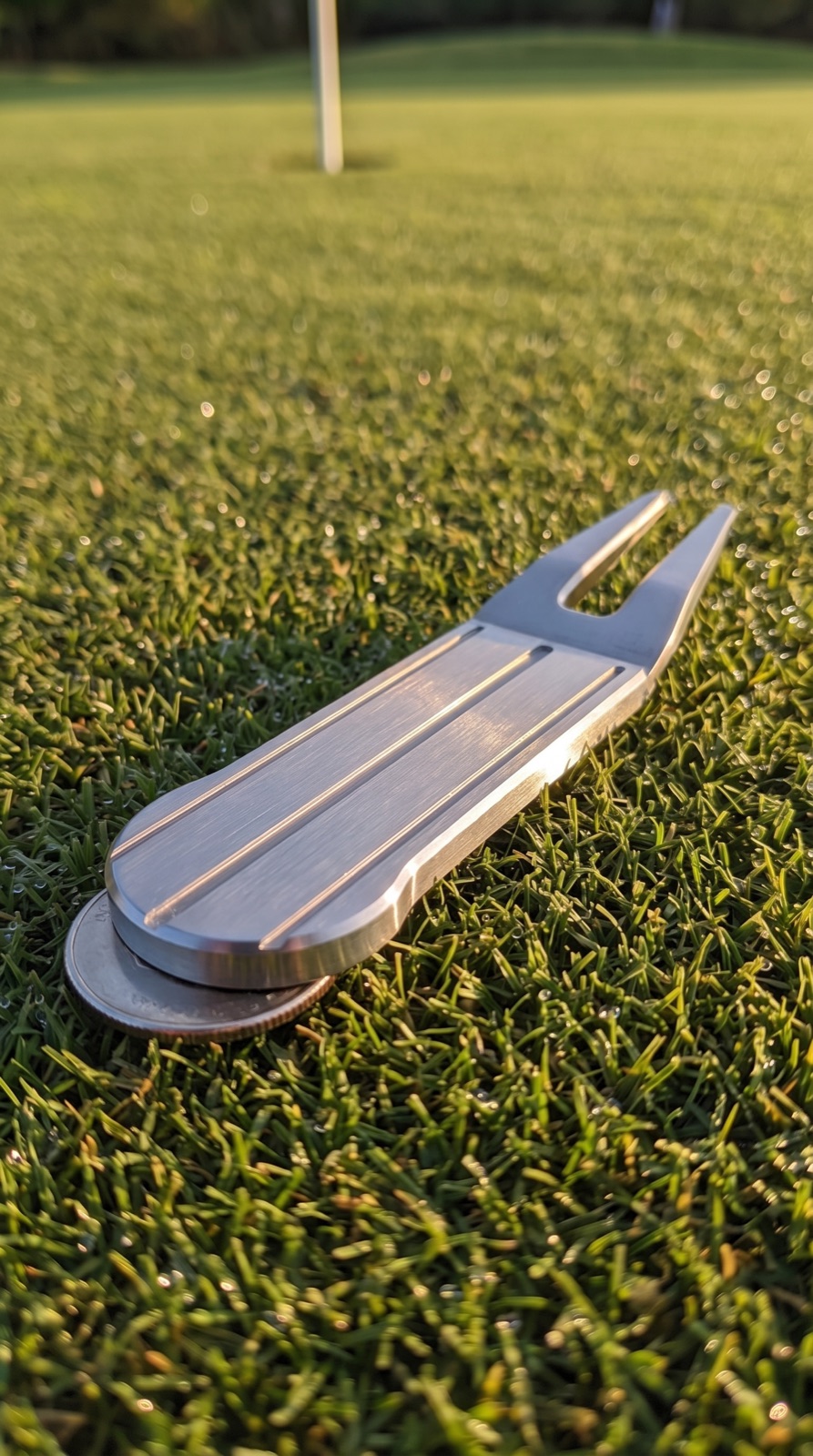
Machined stainless steel alignment tool resting on a putting green at golden hour
Solid stainless, brushed and chamfered — no plastic anywhere in the assembly.

How it works

Three seconds, three moves.

The marker never leaves the spot once it's set. Everything else clips on and off it.

01 — Mark

Press and go

The marker's cross keel presses flush into the green. Its index tick records the exact spot your ball sat, so replacement is honest.

02 — Aim

Nudge with the putter

Dock the tool and tap its upswept tail from a standing position. It swivels on the magnet while the marker holds still — three engraved lines matched to the spacing on your ball.

03 — Walk away

Lift the tool

Take the tool with you and only the low-profile marker remains, so nobody has to putt around your gear.

A putter head nudging the alignment tool's tail to swivel it toward the hole
Set the line from standing height — no crouching, no touching the ball.

The mechanism

A bearing, not a hinge.

The tool's nose seats over the marker's raised hub, so the socket wall — not the magnet — decides where it sits. Lateral play is a machining tolerance measured in tenths of a millimetre.

Because the marker is wider than the tool's nose, its rim and index tick stay visible and stationary while the alignment lines sweep around them. Your reference never moves.

What's in it

One tool, quietly doing four jobs.

Triple-line sighting

Three engraved lines set at true ball-stripe spacing, uninterrupted from nose to bend.

Magnetic swivel

A single disc magnet holds the tool while the hub seat keeps it centred and turning true.

Divot fork

Tapered tines at the tail, thinned to a blade edge so they enter turf rather than tear it.

Hidden cap-lifter

A notch recessed into the underside of the fork root. Invisible from above, useful at the 19th.

Conforming option

A compact variant keeps the docked assembly inside the USGA envelope for tournament play.

Pocket-safe

Nothing to snap. The marker's shallow keel replaces the fragile spikes that break on plastic markers.

Material
17-4PH stainless steel, H900 condition — hardened, ferromagnetic, corrosion resistant
Marker
30 mm disc, low-profile lens section, full-width cross keel
Tool
92 mm overall, 4.5 mm body, 26° upswept tail with divot fork
Coupling
Hub-in-seat journal with disc magnet; swivels 360°
Status
Patent pending — U.S. provisional application filed September 2026

First run

Be first to get one.

We're finishing field testing and tooling the first production run. Leave your email and you'll hear the moment they're available — no other mail, ever.

One email when the first run is ready. Unsubscribe any time.